Olzhas Bektenov participated in the 9th Kazakhstan Global Investment Roundtable (KGIR) in Shymkent, where agreements worth $4.8 billion were signed
 Back to the list

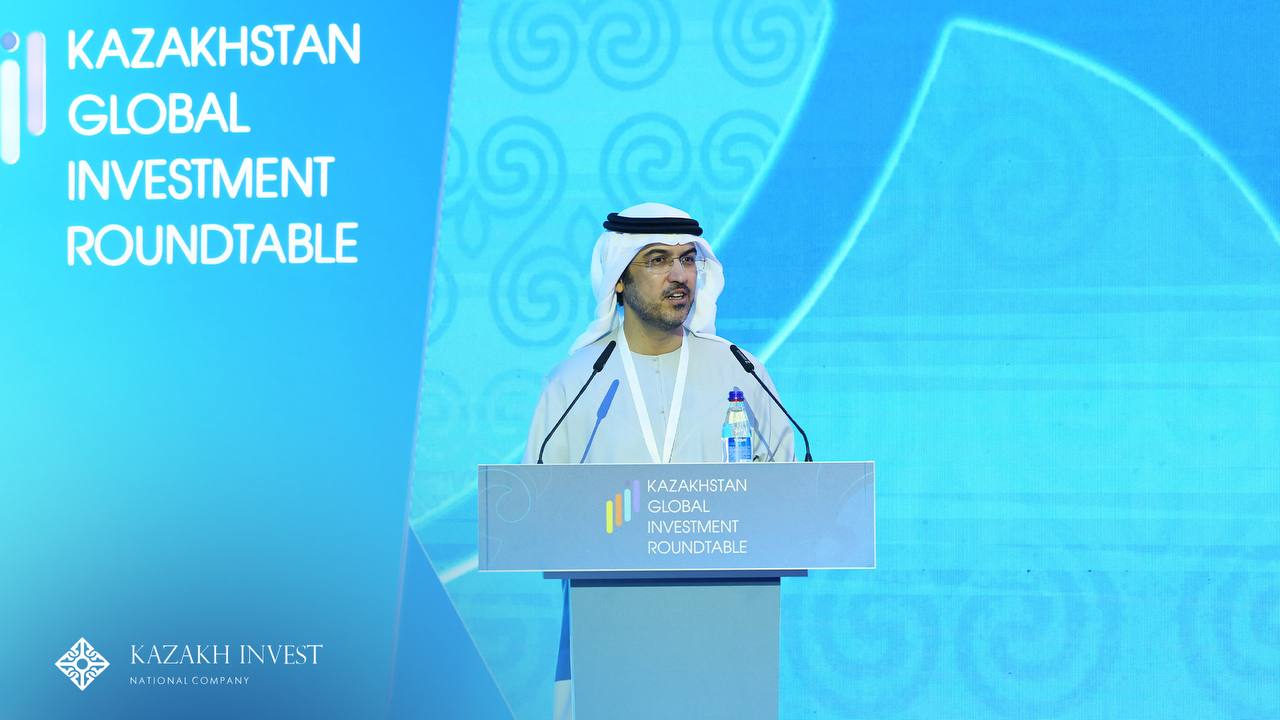
Prime Minister of the Republic of Kazakhstan Olzhas Bektenov took part in the 9th Kazakhstan Global Investment Roundtable. This year, the event is being held in the city of Shymkent—a testament to the dynamic development of this major metropolis, which sits at the crossroads of key Eurasian trade routes and the Western Europe–Western China international transport corridor.
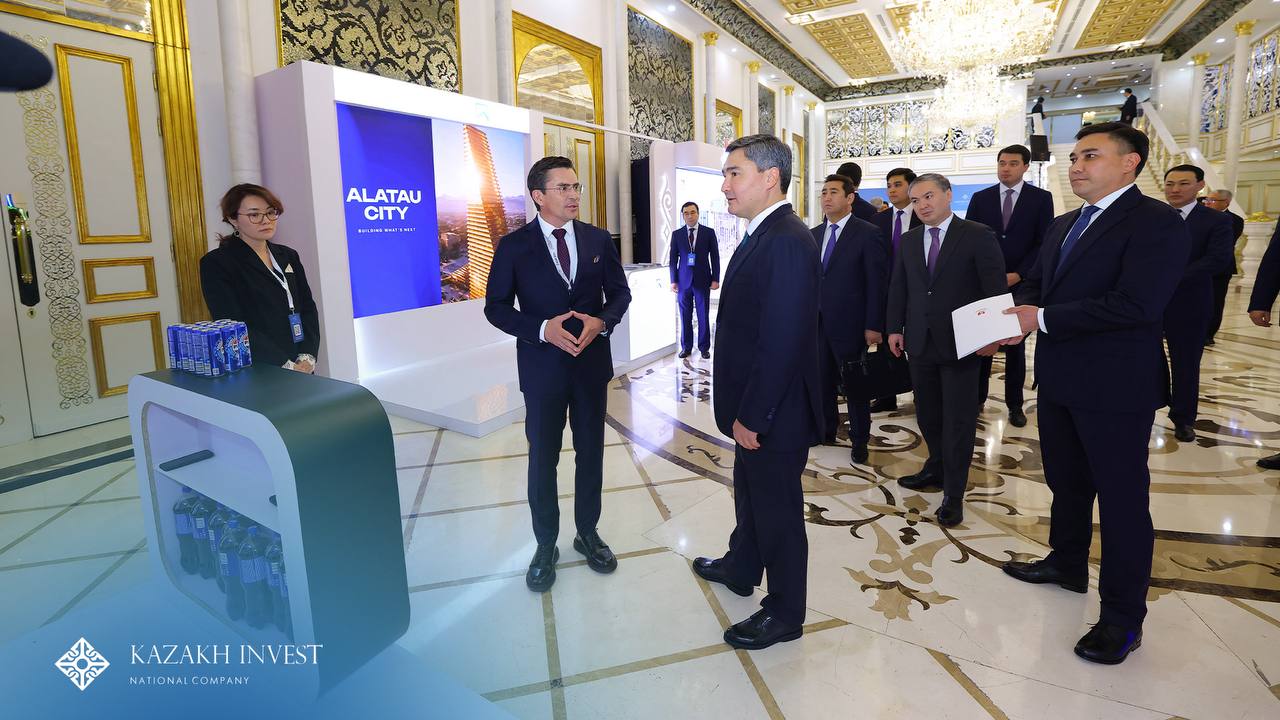
Before the plenary session, Olzhas Bektenov reviewed several projects being implemented in collaboration with foreign partners across sectors such as manufacturing, the agro-industrial complex, and energy. These include a wind power plant by Masdar in the Zhambyl region, renewable energy facilities by China Energy in the Karaganda and Turkistan regions, a Carlsberg Group soft drink plant in the Almaty region, and the Alatau City projects. Particular attention was given to projects located in Shymkent, including the Alsera greenhouse complex and the QazAlPack manufacturing plant.
The KGIR-2026 forum brought together over 500 investors and business representatives from more than 40 countries, all focused on fostering a constructive dialogue.
Opening the plenary session—themed "From Stability to Growth: Kazakhstan’s New Investment Cycle"—the Prime Minister briefed the business community on the extensive investment opportunities that have been established and are actively being developed under the direction of President Kassym-Jomart Tokayev.
"We place special emphasis on establishing a direct dialogue with the international business community. Last year, the country’s GDP exceeded $300 billion, marking a growth rate of 6.5%. Since gaining independence, Kazakhstan has attracted nearly half a trillion dollars in foreign direct investment." Over the last five years alone, more than $100 billion has been attracted. I am convinced that Kazakhstan has every reason to move forward with confidence. A key priority for us is the qualitative transformation of the economy through the adoption of advanced technologies, the creation of new industrial facilities, and the deep processing of raw materials. These strategic priorities are embedded in the updated Investment Policy Concept through 2030. "Kazakhstan remains an open and predictable country for long-term investment," emphasized Olzhas Bektenov. He invited investors to take an active part in ambitious projects—such as the "Data Center Valley" in Ekibastuz and the development of the high-tech "Alatau City"—as well as other initiatives that open new horizons for mutually beneficial cooperation.
Priority sectors for investment include the manufacturing and chemical industries, food production, transport engineering, the agro-industrial complex and agricultural processing, digitalization and IT infrastructure development, and the construction of high-tech cities.
Kazakhstan offers a highly favorable environment for investors: the "Kazakhstan Investment House" serves as a one-stop shop providing over 100 types of export and industrial support. A special "Altyn Visa" regime has been introduced, and the Astana International Financial Centre (AIFC) allows for the application of English law. Furthermore, mechanisms to protect investor rights are in place under the oversight of the Prosecutor General’s Office, and a dedicated government council provides comprehensive support for investment projects. Kazakhstan’s investment appeal is also validated by international ratings; leading agencies continue to assign the country an investment-grade rating. For the first time in a decade, S&P has upgraded Kazakhstan’s sovereign rating to "BBB" with a stable outlook. Additionally, the country climbed 17 positions in the Global Investment Risk and Resilience Index, reaching 53rd place. The Prime Minister emphasized that leading foreign companies continue to choose Kazakhstan for their new projects, as evidenced by a number of successfully implemented initiatives. For instance, Stadler Rail has launched the production of a new generation of passenger railcars in Astana; the Carlsberg Group has opened a modern beverage production facility; Harvest Agro Holding is developing a large-scale agro-industrial cluster; Mars is establishing a pet food production plant; and Air Liquide is advancing the hydrogen industry.
The plenary session also featured remarks from Gabit Syzdykbekov, Akim (Mayor) of Shymkent; Kelly Ortberg, President and CEO of The Boeing Company; Muhammad Sulaiman Al-Jasser, President of the Islamic Development Bank and Chairman of the Islamic Development Bank Group; Mohamed Jameel Al Ramahi, CEO of Masdar; Ludo Anton Sarens, President of Sarens Kazakhstan; and Josef Lasselsberger, CEO of the Lasselsberger Group.
On the sidelines of KGIR-2026 in Shymkent, 22 documents worth $4.8 billion were signed.
These include investment agreements for:
• the construction of a 1,000 MW wind power plant with an energy storage system in the Kostanay region, valued at $730 million (between the Ministry of Energy of the Republic of Kazakhstan and Turan Wind Energy LLP);
• the creation of an intelligent monitoring system for Kazakhstan’s highways (ISKAD), valued at $249.6 million (between the Ministry of Transport of the Republic of Kazakhstan and Freedom Lab LLP);
• the construction of a glass container manufacturing plant in the city of Aktobe, valued at $150 million (between the Ministry of Industry and Construction of the Republic of Kazakhstan and Aktobe Steklo).
Memorandums include:
• the implementation of a project to build a network of 20 regional inclusive schools, valued at $1 billion (between the Ministry of Education of the Republic of Kazakhstan and DSKZ & KAMC LLP);
• the construction of a multifunctional terminal as part of the first phase of the development of the Kuryk port, valued at $1 billion (between the Baiterek National Investment Holding JSC and Guoyou Materials Group Co., Ltd.);
• the implementation of the "International Medical City of Kazakhstan" investment project, valued at $650 million (between KAZAKH INVEST NC JSC and Shoval Kazakhstan Ltd);
• the construction of a 250 MW data center within the "Data Center Valley," valued at $500 million (between the Ministry of Artificial Intelligence and Digital Development of the Republic of Kazakhstan and Amsa Digital);
• the creation of a meat cluster, valued at $111.1 million (between the Akimat of the Turkistan region and Nurym Group LLP).
• on the construction and operation of a university campus, including a dormitory, in Astana—based on the British educational model—valued at $40.8 million (between the Ministry of Science and Higher Education of the Republic of Kazakhstan and Coventry University Kazakhstan);
• on the construction of a manufacturing plant for polypropylene bags and big bags, valued at $8.8 million (between the Akimat of the Kyzylorda Region and Apex Packaging), among others.
Additionally, a framework agreement was signed for the construction of a plant for the production of PET preforms and plastic recycling, valued at $74.3 million (between the Akimat of Shymkent and KOKSAN LLP).
For their contributions to the implementation of socio-economic and industrial projects, awards were presented to the following individuals: Veli Dinçel, General Director of Coca-Cola Almaty Bottlers LLP; Naci Ağbal, General Director of Aksa Energy; Sun Pengcheng, General Director of Kazakhstan Hydrogen Peroxide LLP; Alexey Kotov, General Director of KamLitKZ LLP; Stanislav Li, General Director of Saran Machinery LLP; Ahmed Budan, Chairman of the Board of Fabe Agro LLP; Ruslan Zhumagulov, Chairman of the Board of Emirates Kazakhstan Education Investment Group; Vyacheslav Maltsev, President of Carlsberg Central Asia and Head of the Central Asia region; Rami Malak, Regional Director of SABIS; Darren Jones, Head of the international educational institution Ardingly Astana; Shota Abkhazava, Chairman of the Board of Directors of the TEXOL Group; and Balaji Srinivasan, Founder and CEO of Network School.